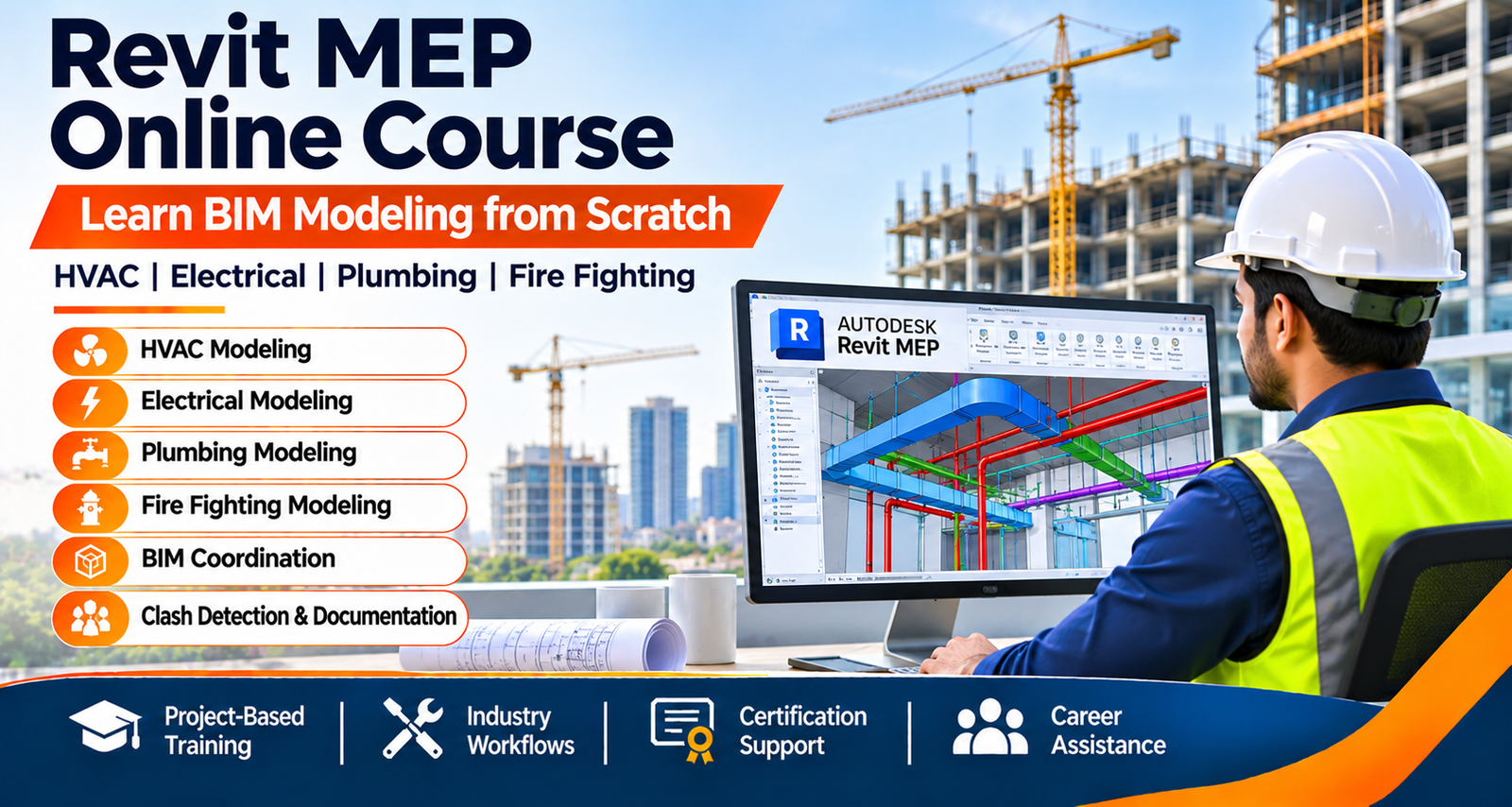
Best Revit MEP Online Course: Complete Guide to Learning BIM Modeling from Scratch
Building Information Modeling (BIM) has transformed the construction industry. Modern building projects increasingly rely on BIM workflows to improve design coordination, reduce project conflicts, and enhance project efficiency.
As a result, many students, engineering graduates, and working professionals ask: "What is the best Revit MEP online course to buy for learning BIM modeling from scratch?"
The answer depends on your career goals, learning style, practical training requirements, and whether you want a certificate or industry-ready skills.
This guide explains how beginners can choose the right Revit MEP course and understand the skills required to develop a career in BIM modeling and MEP engineering.
What Is Revit MEP?
REVIT MEP Training in Hyderabad is Autodesk's Building Information Modeling software used by engineering and construction professionals to create coordinated 3D models of mechanical, electrical, and plumbing systems in buildings.
It helps MEP teams develop building services models, prepare construction documentation, coordinate different engineering disciplines, and identify potential design conflicts before construction begins.
What Can You Do with Revit MEP?
- HVAC modeling and duct system layouts
- Electrical modeling and lighting systems
- Plumbing modeling and pipe networks
- Fire fighting system modeling
- BIM coordination and model review
- Clash detection workflows
- Construction documentation
- Shop drawings and detailed views
Revit MEP is used by MEP consultants, contractors, BIM service providers, architects, and engineering firms working on residential, commercial, and industrial projects.
Why Learn BIM Modeling?
BIM has become an important part of modern construction workflows. It allows project teams to work with coordinated digital building models instead of relying only on separate 2D drawings.
Improved Project Coordination
Helps different engineering teams coordinate HVAC, electrical, plumbing, and architectural systems.
Reduced Design Errors
Model-based workflows help teams identify potential conflicts and design issues earlier.
Faster Documentation
Supports the preparation of plans, sections, schedules, and coordinated project drawings.
Better Visualization
Provides 3D views that help project teams understand building services layouts.
Improved Collaboration
Supports information sharing and coordination between multiple project disciplines.
Career Development
Developing BIM skills can help engineering professionals explore specialized roles in construction.
What Should Beginners Look for in a Revit MEP Course?
Many online courses focus mainly on software commands. However, learning individual commands is not enough to understand how Revit MEP is used in real engineering projects.
A good Revit MEP course should combine software fundamentals, building services concepts, modeling exercises, documentation, and project-based learning.
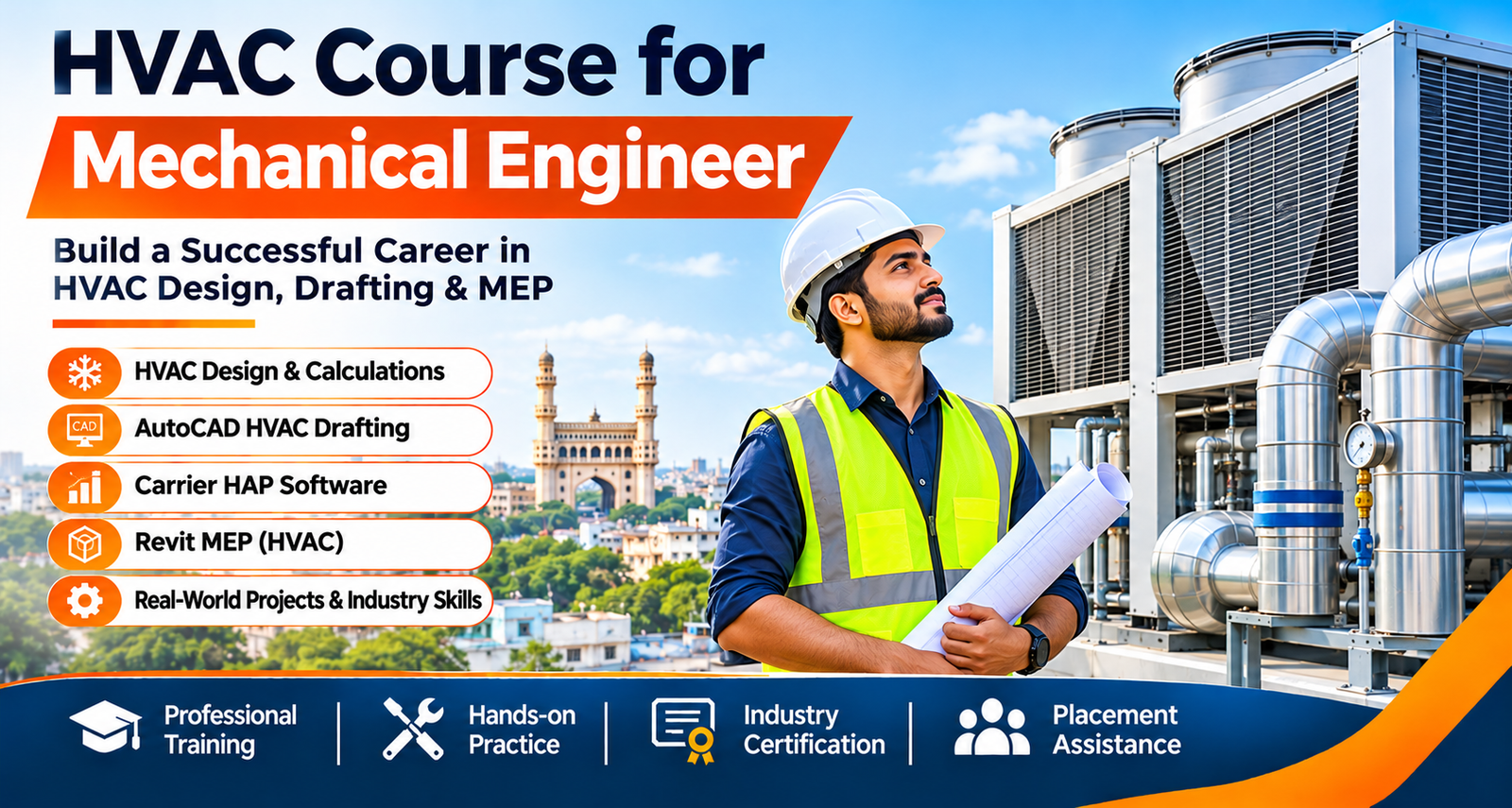
1. HVAC Modeling
HVAC modeling focuses on representing heating, ventilation, and air conditioning systems in a coordinated BIM environment.
- Air Handling Units (AHUs)
- Duct systems and duct fittings
- Air terminals and diffusers
- Air distribution networks
- HVAC equipment placement
- Basic duct routing and system documentation
2. Electrical Modeling
Electrical modeling introduces the creation and coordination of electrical services within a building model.
- Lighting systems and fixtures
- Power systems and electrical equipment
- Cable routing and containment concepts
- Electrical panels
- Electrical layouts and documentation
- Basic electrical system coordination
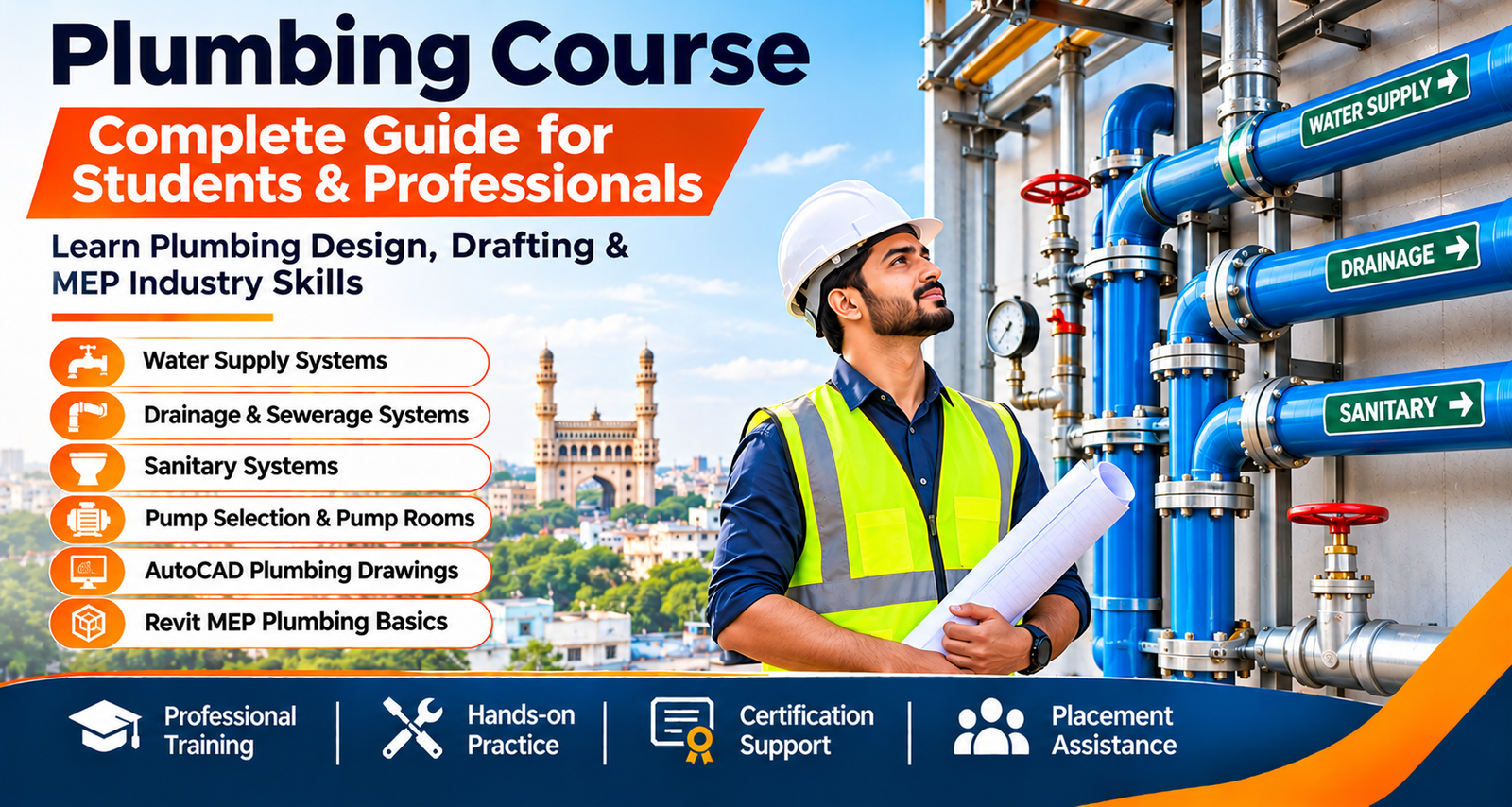
3. Plumbing Modeling
Plumbing modeling covers water supply, drainage, and plumbing fixtures used in building services.
- Water supply systems
- Drainage and waste systems
- Plumbing fixtures and equipment
- Pipe routing and fittings
- Plumbing layouts and documentation
4. Fire Fighting Modeling
Fire fighting modeling introduces the representation of fire protection systems in building projects.
- Sprinkler systems
- Hydrant systems
- Fire protection layouts
- Pipe routing and fittings
- Fire fighting equipment placement
Self-Paced Courses vs Instructor-Led Revit MEP Training
Before purchasing a Revit MEP online course, compare the learning formats. Both self-paced and instructor-led training can be useful, depending on your schedule and learning requirements.
Self-Paced Revit MEP Courses
Self-paced courses are generally delivered through recorded video lessons and online learning platforms. Students can access lessons according to their own schedule.
Advantages
- Learn at your own pace
- Flexible learning schedule
- Can be suitable for independent learners
- Recorded lessons may be available for revision
- Different course options and price ranges
Limitations to Consider
- Limited direct practical guidance in some courses
- May not include real project mentoring
- Doubt resolution can be delayed or limited
- Course quality and project coverage vary
Examples of self-paced learning options include platforms such as Udemy and other recorded online learning providers. Check the latest syllabus, instructor details, reviews, and access conditions before purchasing.
Instructor-Led Revit MEP Training
Instructor-led training provides structured sessions with a trainer who guides students through software concepts, modeling exercises, and project workflows.
Advantages
- Live trainer guidance and doubt clarification
- Structured learning schedule
- Project-based exercises
- Practical modeling assignments
- Guidance on industry workflows
- Potential resume and interview support
- More direct feedback on modeling work
Self-paced learning can work well if you are comfortable studying independently. Instructor-led training may be more suitable if you are a beginner who needs structured guidance, practical assignments, and feedback. Always verify what support and project exposure are actually included.
Skills You Should Learn Alongside Revit MEP
Students should not learn Revit MEP in isolation. A BIM professional also needs to understand the building systems being modeled. Design knowledge helps learners create more meaningful models and understand engineering requirements.
HVAC Design
- Heat load calculation concepts
- Duct design fundamentals
- HVAC system types
- Air distribution concepts
Electrical Design
- Electrical load calculations
- Lighting design fundamentals
- Power distribution
- Electrical layout concepts
Plumbing Design
- Water supply systems
- Drainage systems
- Pipe sizing concepts
- Plumbing fixture layouts
Fire Fighting Design
- Sprinkler systems
- Hydrant systems
- Fire protection layouts
- Basic system coordination
Career Opportunities After Revit MEP Training
Revit MEP training can help students develop skills relevant to BIM and MEP-related roles. The exact job opportunities depend on education, software proficiency, project experience, and employer requirements.
Revit MEP Modeler
Creates and updates building services models using Revit.
BIM Engineer
Supports BIM modeling, documentation, and project coordination.
BIM Coordinator
Coordinates models and reviews information across project disciplines.
HVAC BIM Engineer
Works on HVAC equipment, duct systems, and related BIM models.
Electrical BIM Engineer
Models electrical services and supports coordinated electrical documentation.
Plumbing BIM Engineer
Develops plumbing models for water supply and drainage systems.
MEP Engineer
Works with building services systems and their project requirements.
BIM Specialist
Develops specialized knowledge in BIM processes, models, and coordination.
BIM Engineer Salary in India
BIM salaries vary according to experience, technical skills, project complexity, software knowledge, location, and company requirements. The following figures are approximate estimates, not guaranteed salary packages.
Freshers
| Job Role | Approximate Annual Salary |
|---|---|
| Revit MEP Modeler | ₹3 – ₹6 LPA |
| BIM Engineer | ₹4 – ₹7 LPA |
Experienced Professionals
| Job Role | Approximate Annual Salary |
|---|---|
| BIM Engineer | ₹6 – ₹15+ LPA |
| BIM Coordinator | ₹8 – ₹20+ LPA |
Revit MEP Job Opportunities in Gulf Countries
Construction and infrastructure projects across the Gulf region create opportunities for professionals with relevant BIM and MEP experience. Countries where BIM-related roles may be available include:
- United Arab Emirates (UAE)
- Saudi Arabia
- Qatar
- Oman
- Kuwait
- Bahrain
Skills Employers May Look For
- Revit MEP modeling
- HVAC, electrical, and plumbing modeling
- Fire fighting system modeling
- Clash detection and coordination workflows
- Construction documentation and shop drawings
- Understanding of project standards and BIM processes
Employers may also expect relevant engineering qualifications, project experience, communication skills, and familiarity with their BIM execution requirements.
How to Choose the Best Revit MEP Course
Before buying an online course or enrolling in a training program, review the syllabus carefully. A course should help you progress from basic software navigation to practical modeling and project workflows.
- HVAC modeling and duct systems
- Electrical modeling and layouts
- Plumbing modeling and pipe systems
- Fire fighting modeling
- BIM coordination fundamentals
- Clash detection concepts and workflows
- Construction documentation and shop drawings
- Practical project assignments
- Trainer guidance and doubt support
- Career guidance and placement assistance, if offered
Questions to Ask Before Enrolling
- Does the course start with beginner-level Revit concepts?
- Will I practice HVAC, electrical, and plumbing modeling?
- Are practical building projects included?
- Will the trainer explain BIM coordination workflows?
- Is doubt clarification available?
- What are the certificate and assessment requirements?
- Is placement support included, and what exactly does it cover?
Why Consider Al-Imran Techno Solutions for MEP Training?
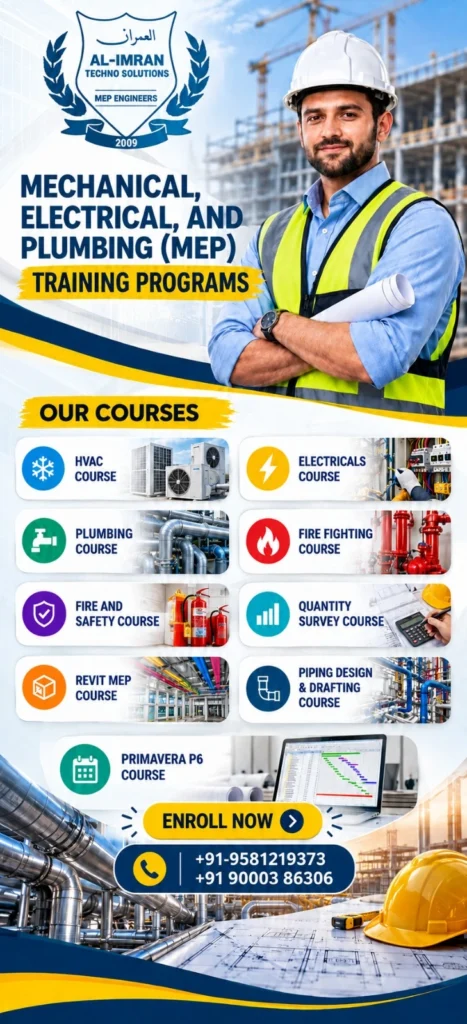
Al-Imran Techno Solutions provides MEP and engineering-related training opportunities in Hyderabad for students and professionals interested in developing technical skills.
For learners planning a career in BIM and building services, it is useful to understand how Revit MEP connects with HVAC, electrical, plumbing, and fire fighting systems. Combining software knowledge with engineering fundamentals can help students prepare for practical project environments.
Contact the institute to enquire about current Revit MEP or related training availability, course syllabus, batch schedule, practical sessions, training format, and career guidance.
Build Your BIM Skills with Practical Learning
Focus on more than software commands. Learn building systems, modeling methods, documentation, and coordination concepts that support real MEP project workflows.
Frequently Asked Questions (FAQs)
1. What is the best Revit MEP online course for beginners?
The best course is one that starts with Revit fundamentals and covers HVAC, electrical, plumbing, fire fighting modeling, documentation, and practical projects. Compare the syllabus, trainer support, and course reviews before buying.
2. Can I learn Revit MEP from scratch?
Yes. Beginners can start with the Revit interface, project setup, basic modeling tools, views, families, and documentation before progressing to MEP systems.
3. Is Revit MEP useful for mechanical engineers?
Yes. Revit MEP is useful for mechanical engineers working in HVAC design, duct modeling, building services, and BIM coordination.
4. Can electrical engineers learn Revit MEP?
Yes. Electrical engineers can use Revit to model lighting, power systems, electrical equipment, and building electrical services.
5. What is the difference between self-paced and instructor-led Revit MEP training?
Self-paced courses use recorded lessons that learners complete independently. Instructor-led training provides scheduled sessions, trainer interaction, and potentially more direct feedback and project guidance.
6. What jobs can I get after Revit MEP training?
Depending on your qualifications and experience, possible roles include Revit MEP Modeler, BIM Engineer, HVAC BIM Engineer, Electrical BIM Engineer, Plumbing BIM Engineer, and BIM Coordinator.
7. Is Revit MEP in demand in Gulf countries?
Revit MEP and BIM skills are relevant to many construction and building services projects in the Gulf. Job requirements vary by employer, project, and experience level.
8. Do I need engineering knowledge to learn Revit MEP?
Basic knowledge of building services is helpful. Beginners can learn software fundamentals first, then develop HVAC, electrical, plumbing, and fire protection concepts alongside modeling.
9. Does Revit MEP training include a certificate?
Certificate availability depends on the training provider and course. Check the certificate issuer, assessment requirements, and recognition before enrolling.
Conclusion
The best Revit MEP online course is not necessarily the cheapest or the most popular. It is the course that helps you understand BIM workflows, building systems, project coordination, and real-world engineering applications.
Students looking to build careers in BIM, HVAC Design, Electrical Design, Plumbing Design, and MEP Engineering should focus on programs that combine software learning with practical project exposure and industry-oriented skills.
Start Your Revit MEP and BIM Learning Journey!
Explore MEP and engineering training opportunities with Al-Imran Techno Solutions in Hyderabad.
Visit Al-Imran Techno Solutions